








-
The coaching program was seen as successful in building a shared leadership culture throughout the organization.
-
Participants perceived the coaching as generating individual-level insights and providing concrete tools.
-
The process successfully encouraged participants to pause and reflect on both individual and collective leadership.
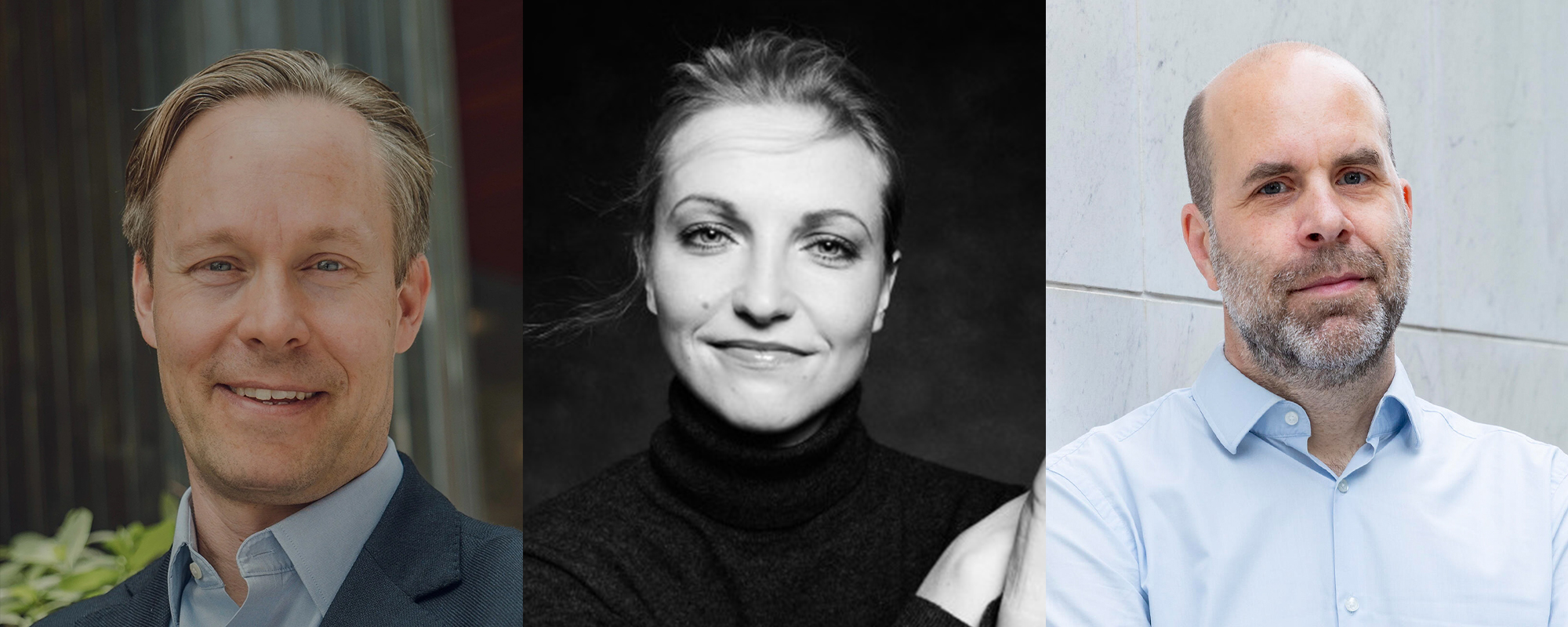
"Technology develops so much every month that our department already has a saying: It's so last week," said Juha Äkräs, Professor of Practice at Aalto University, in his opening remarks at the event on collective coaching.
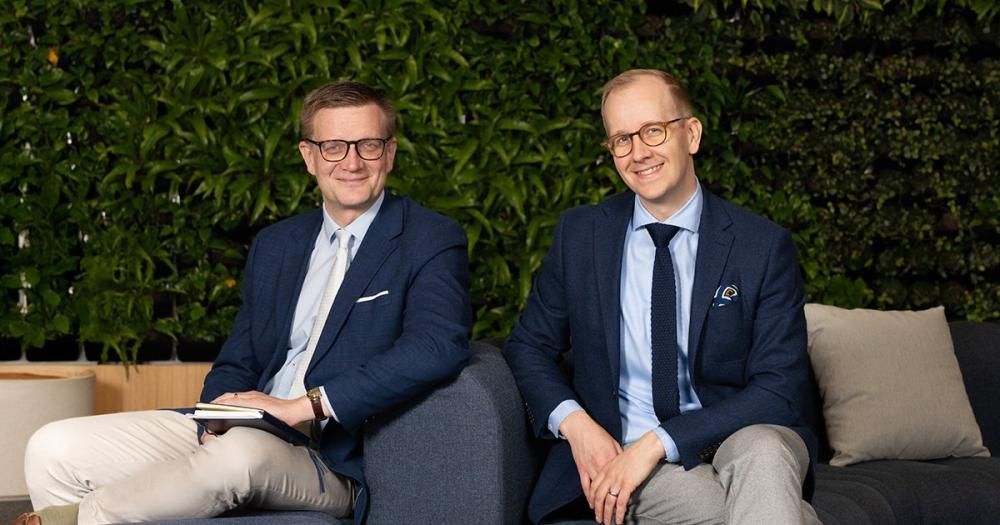
He works alongside Senior University Lecturer Jari Ylitalo at Aalto University's Department of Industrial Engineering and Management, where they both research leadership. Their current project examines the impact of artificial intelligence on executive work, as well as the conditions under which efforts to develop collective leadership are effective.
It was this same rapidly changing operating environment that gave rise to the themes that served as the starting point for the GROW leadership training program delivered for Terveystalo. Aalto EE organized a breakfast event on the program's results, during which Susan Kallio, VP, Business HR, at Terveystalo's Healthcare Services unit, presented the program's objectives and outcomes.
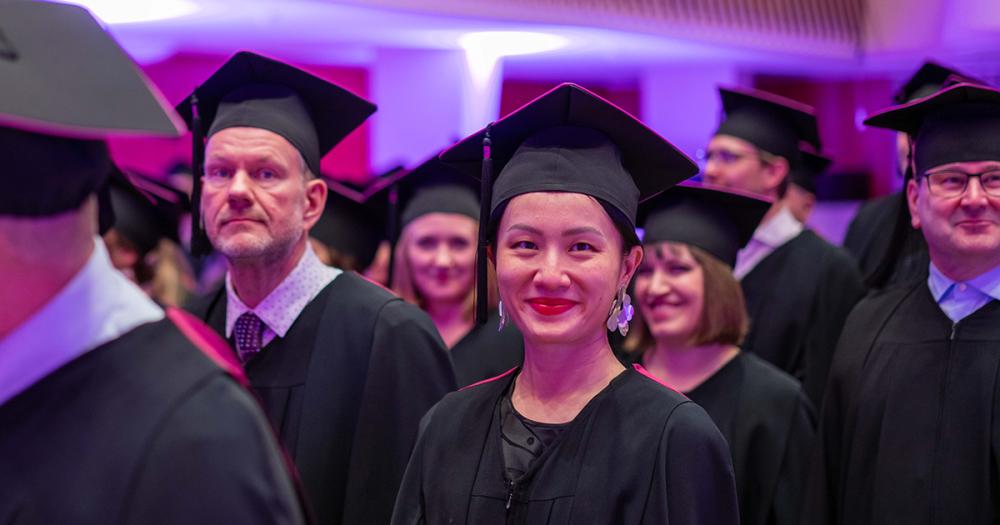
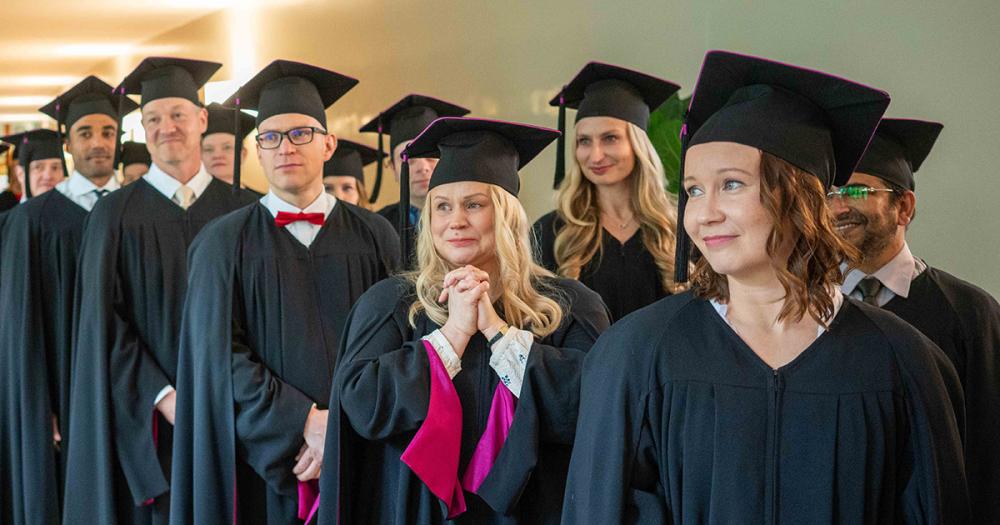
The Terveystalo GROW leadership training program, implemented at the individual, team, and organizational levels, brought together 200 of the company’s leaders over the course of a year.
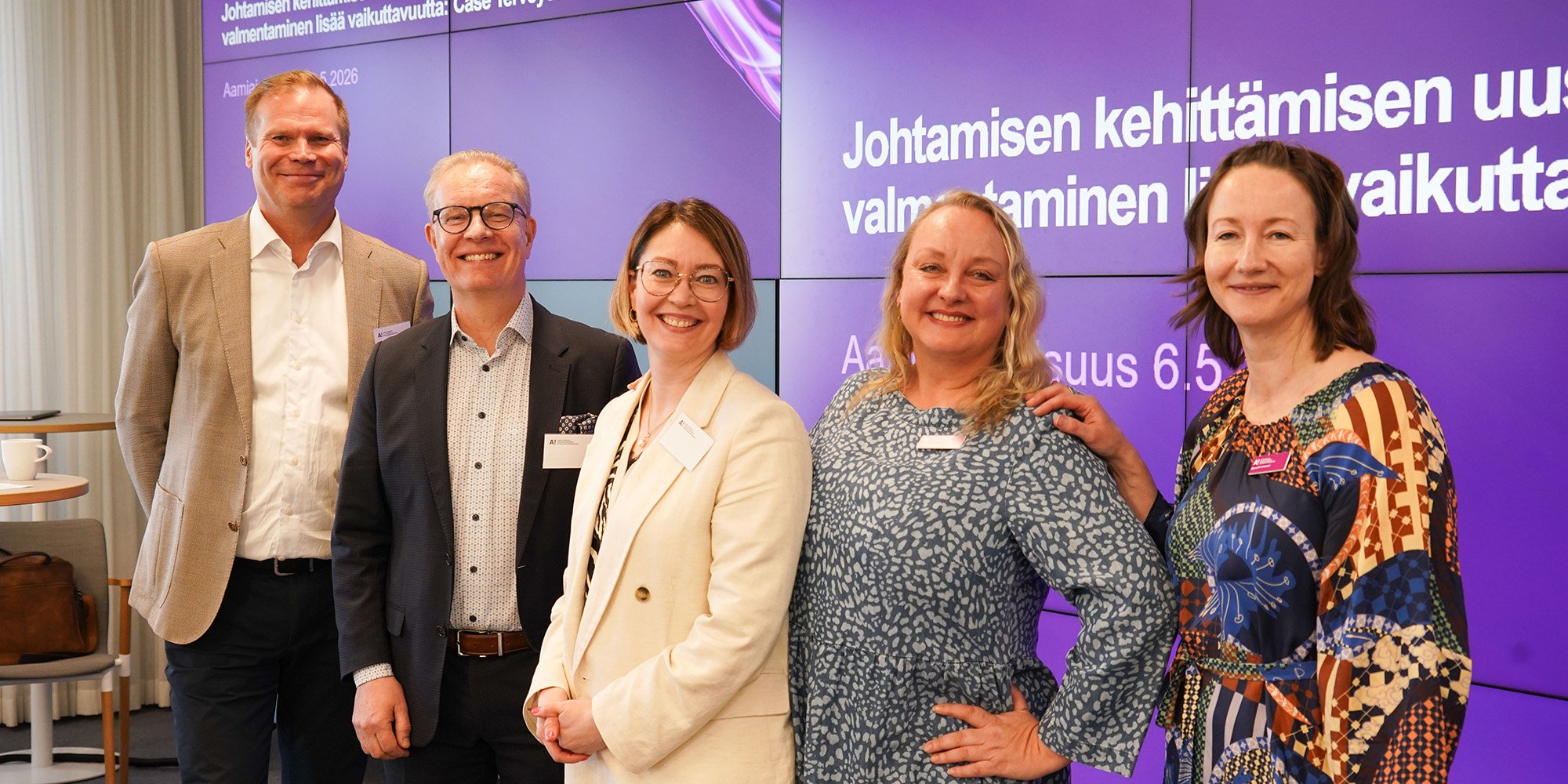
At the event, Kallio, Ylitalo, and Äkräs described together how the collective leadership model works in practice.
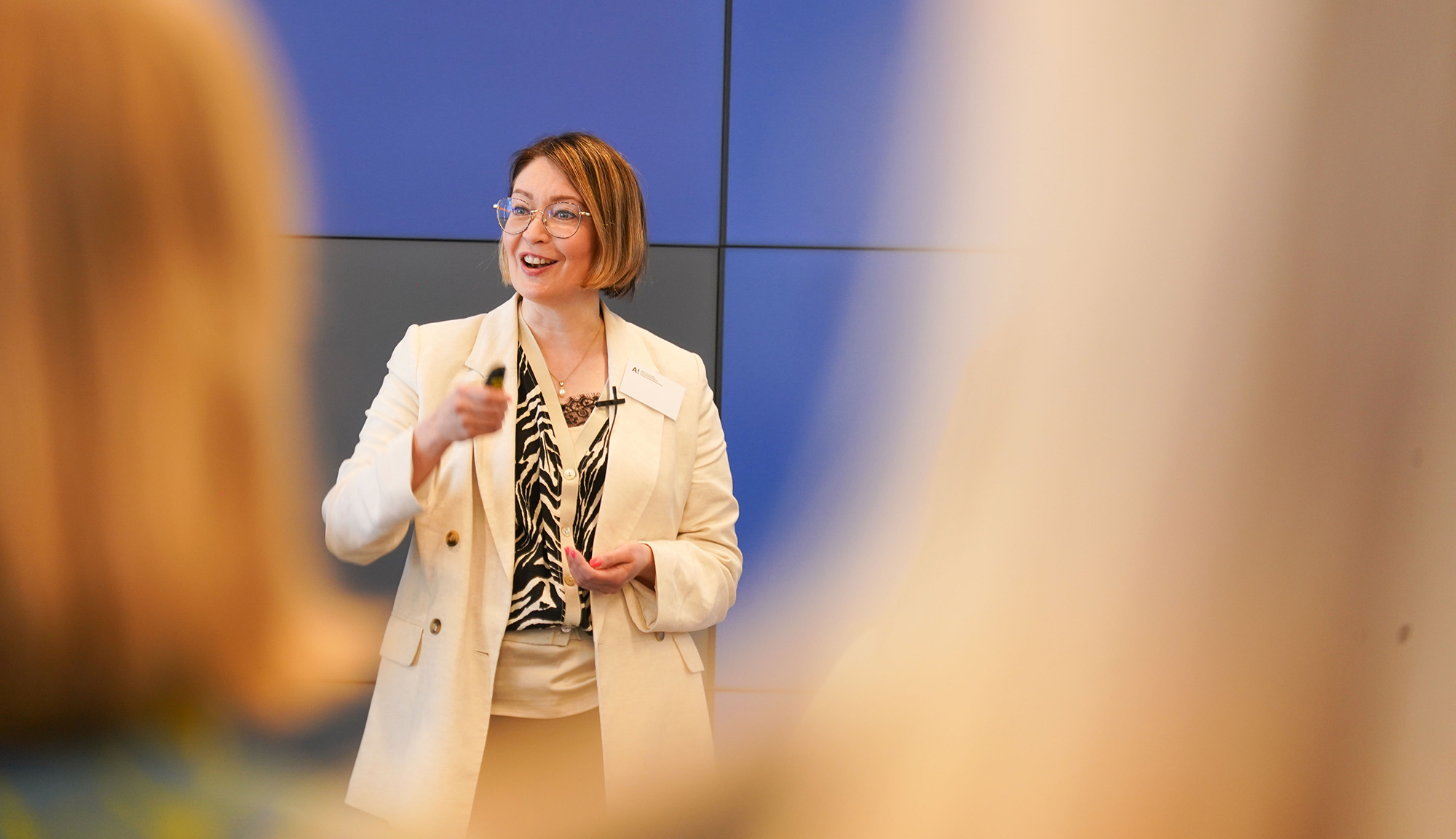
| "Leadership development is important, and we invest in it. It's important that teams also take the time for it," said Terveystalo's Susan Kallio. | |
What if development isn’t an individual achievement but a shared journey?
Drawing on his doctoral research, Juha Äkräs presented an interesting finding: the evidence suggests that leadership effectiveness does not come solely from developing individual leaders' skills. What matters more is how leadership behavior adapts to different situations, and how shared practices of working are built within the organization. The same leadership behavior can produce very different outcomes in different situations and teams.
This was also the starting point for Terveystalo's program. What if leadership wasn't developed separately, but together? Terveystalo has a long tradition of leadership development, so a broad, long-term program was a natural choice.
Susan Kallio said Terveystalo wanted to align leadership practices across its large matrix organization, improve collaboration across unit and role boundaries, and support leaders' growth. Leadership development was closely linked to strategic priorities and customer value creation.
"Traditionally, leadership training is attended mainly by managers and supervisors, but in this training, we recognized that in a complex matrix organization, everyone who plays a significant role in leadership needs to be involved."
“We wanted to establish a common language for leadership and standardize our approach to leadership. Traditionally, leadership training is attended mainly by managers and supervisors, but in this training program, we recognized that in a complex matrix organization, everyone who plays a significant role in leadership needs to be involved. The goal was to get the entire group—including those responsible for different business functions—to embark on a shared development journey.”
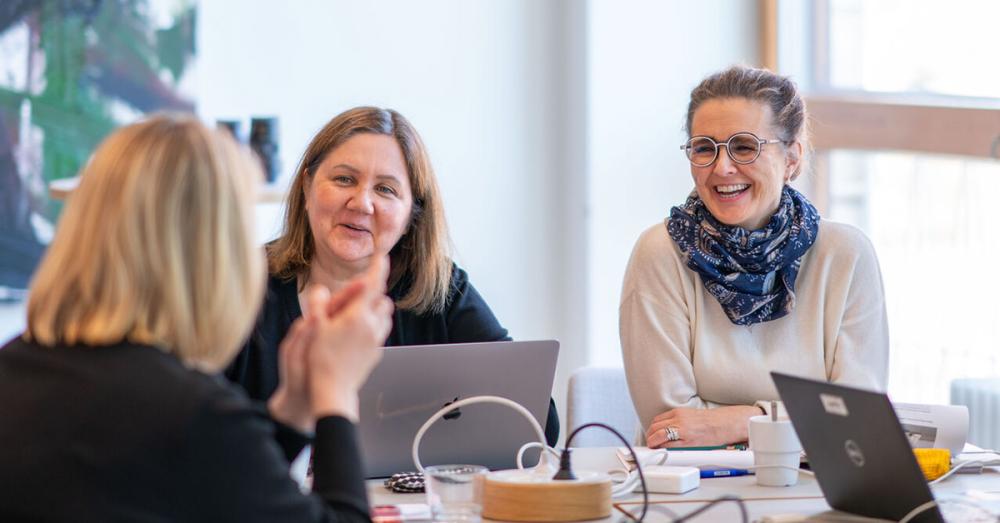
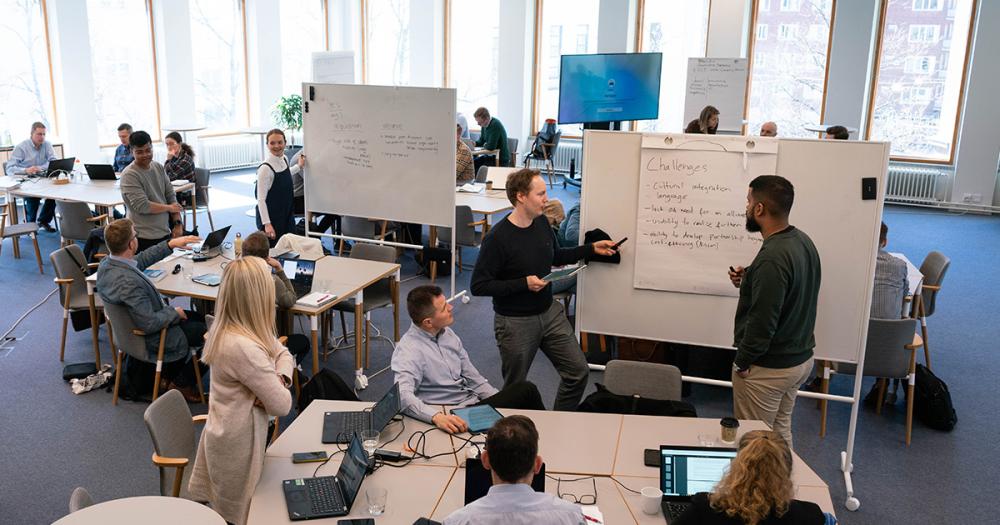
The program led by Ylitalo and Äkräs was not a single course or lecture, but rather a program tailored for five groups of 40 people, which included on-site sessions, mid-assignments, experiments in their own work, and reflection—individually, in teams, and in leadership groups. What mattered was that development happened simultaneously at the levels of individual leadership, shared team practices, and the organization’s common language, operating models, and culture. This ensured that shared practices did not remain merely the insights of individual participants but began to manifest themselves in the teams’ day-to-day collaboration and decision-making.
One of the program's key practical tools was a team maturity model, which teams and leadership teams used to examine the current state of their own work.
One of the program's key practical tools was a team maturity model, which teams and leadership teams used to examine the current state of their own work. The maturity model helped teams identify where their collaboration and shared leadership were strong and where development was needed. The model provided a shared language to the conversation and made leadership more visible. Many participants said they started using the model in their own work right away, and it was seen as making it easier to identify shared areas for development and choose a direction.
https://vimeo.com/1195563111/847fdd35c3?share=copy&fl=sv&fe=ci
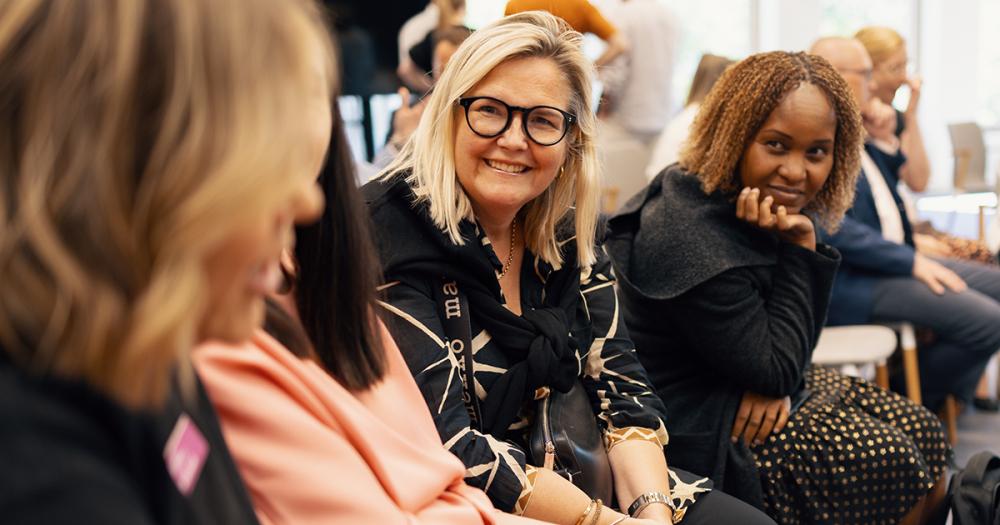
At the conclusion of the program, all 200 leaders came together for a joint event.
"By that point, everyone had embraced the working approach introduced throughout the coaching process, which made it easy to mix participants across teams," Susan Kallio said.
Behind the program’s success was one key factor in particular: the fact that the company’s leadership was genuinely and enthusiastically involved and took ownership of the process.
It was also important that the leadership development model wasn’t, so to speak, set in stone before its implementation. Instead, it was iterated throughout the process.
There are always two distinct dimensions to leadership development: leader development and leadership development.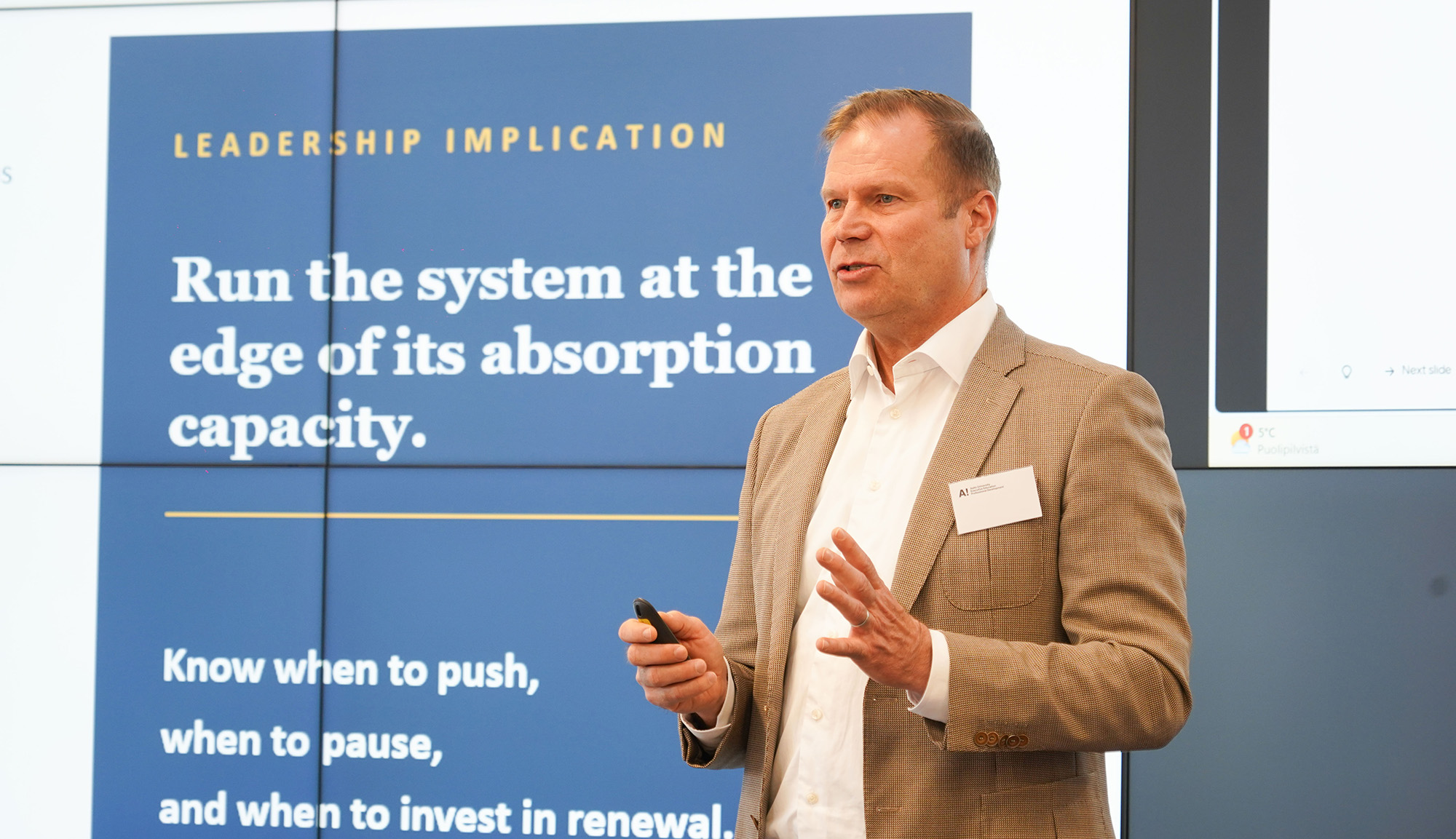
| "Leadership development always involves two distinct dimensions: developing the leader and developing leadership," Juha Äkräs said. | |
What is the Ylitalo and Äkräs model all about?
Ylitalo and Äkräs’s model of collective leadership responds to one key observation: leadership is more effectively examined and developed as a communal, contextual, and relationship-based phenomenon rather than as individual traits or behaviors, even though the expertise and actions of individuals are also significant. There are always two distinct dimensions to leadership development: leader development and leadership development.
The real impact of leadership development emerges only when both dimensions are cultivated simultaneously, and the emphasis shifts primarily to the collective dimension.
"A key aspect of the program was that the work began with a situational analysis and the creation of a shared understanding of the current state of leadership: what leadership looks like today and what we would like it to be. That shared understanding created genuine motivation for learning and change. Once a common direction had been established, the actual interventions, including workshops and training sessions, could be scheduled at just the right time. They were not standalone training days but carefully designed responses to real, identified needs," Ylitalo explained.
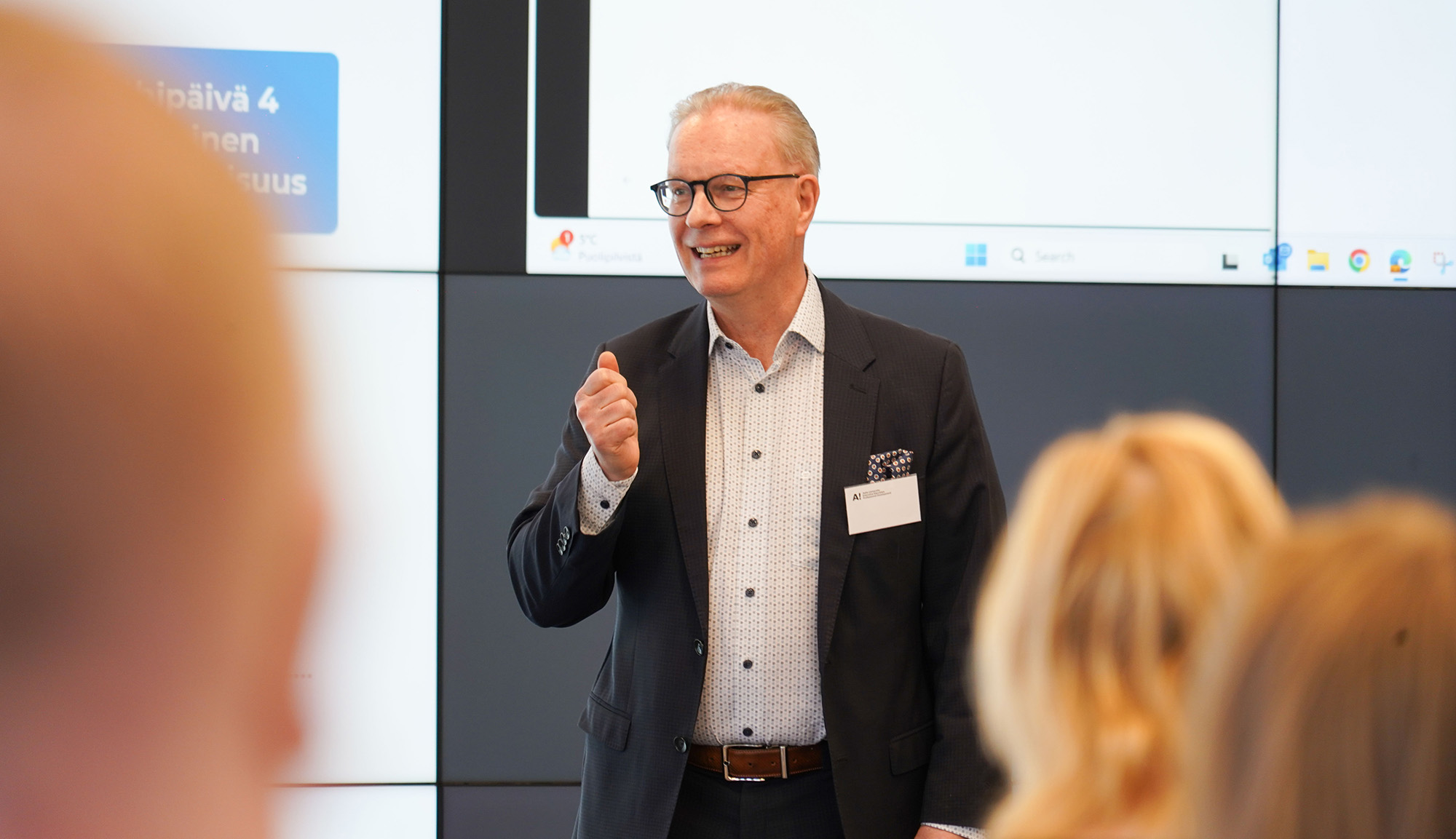
| "It's easy to think of leadership as everyone's own private matter, even though it is core work. Talking about leadership should therefore be spread more widely," said senior university lecturer Jari Ylitalo, who gave a more detailed presentation on the implementation and results of the Terveystalo GROW – Lupa kasvaa (Permission to Grow) program. | |
Equally important was the transfer of learning, the fact that what is learned is reflected in concrete changes in behavior within teams and organizations.
“When development efforts focus solely on individuals, the transfer of learning often remains limited. When learning takes place collectively, however, it becomes much easier to embed new ways of working into everyday practice. In this sense, shared learning is critical.”
Throughout the transformation, the focus was deliberately placed on achieving meaningful impact. Progress was monitored through participant surveys and discussions with key stakeholders. The insights gained were then used to refine both the focus and content of the program's next phase.
A critical factor in its success was the business leadership team's commitment and ownership. Rather than introducing a pre-designed model, the program was developed collaboratively with leaders and participants throughout the process.
"These discussions and analyses helped shape the program's shared objectives and overall process. A critical factor in its success was the business leadership team's commitment and ownership. Rather than introducing a pre-designed model, the program was developed collaboratively with leaders and participants throughout the process."
Ylitalo and Äkräs also emphasized the role of the coaches, whose approach was highly contextual and collaborative. Rather than providing ready-made answers, they focused on facilitating shared reflection, learning, and dialogue.
"The coaches acted more as community coaches, supporting participants in examining their own work and leadership practices while continuously keeping the broader goals and progress of the process in view."
Susan Kallio credited the program's success to its ability to make the company's strategy visible, and noted its value as a tool to support transformation.
"For driving strategic transformation, it's hard to think of a more effective foundation than a program like this," Susan Kallio said.
Terveystalo's GROW program demonstrated that leadership impact is not created solely through the capabilities of individual leaders. Rather, it stems from an organization's ability to build shared thinking, common ways of working, and continuous learning across the organization. In today's rapidly changing environment, that capability is more important than ever.
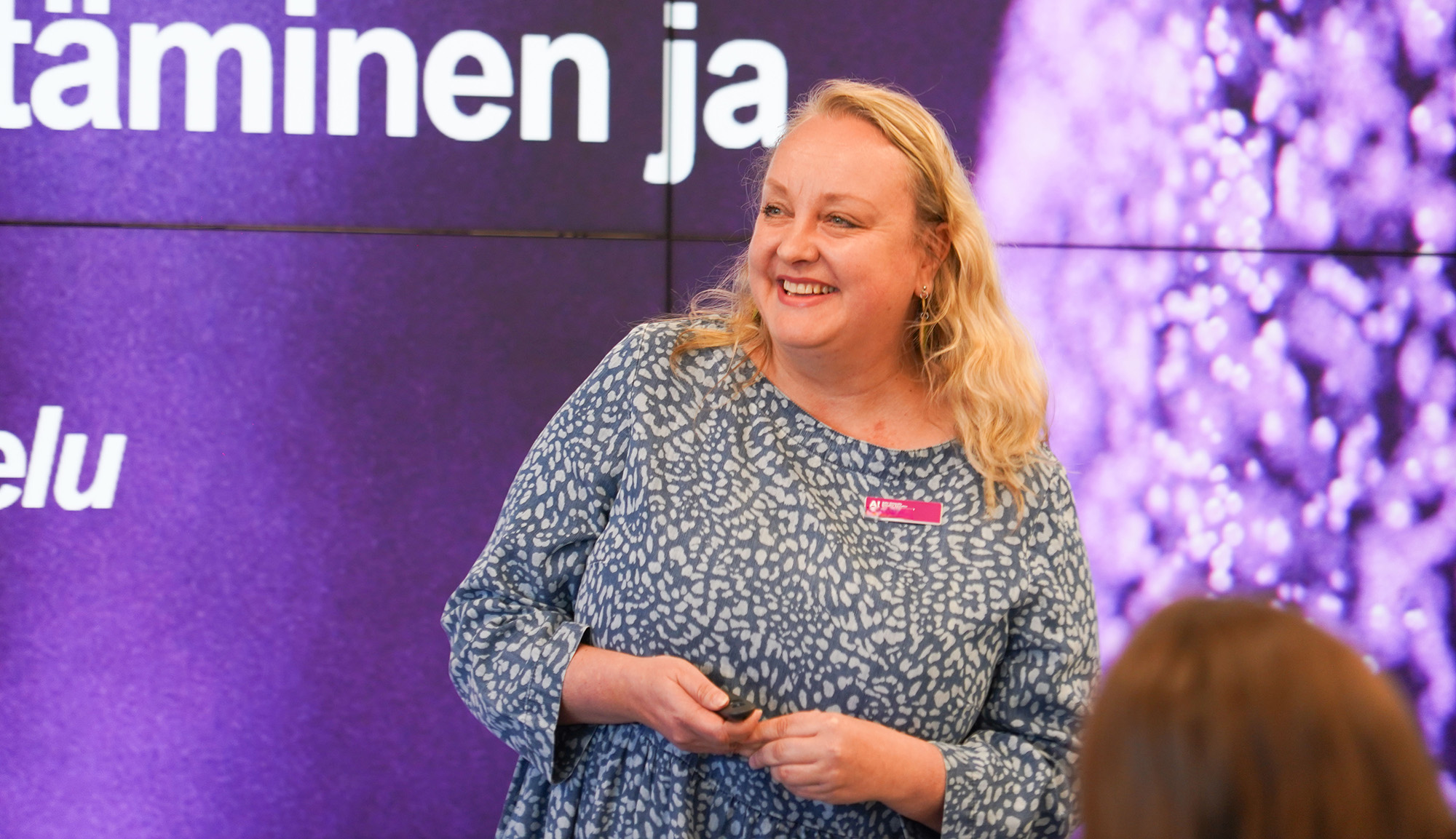
| Bella Sillman, Client Director at Aalto EE, outlined Aalto EE's approach to supporting Terveystalo's leadership development goals. | |
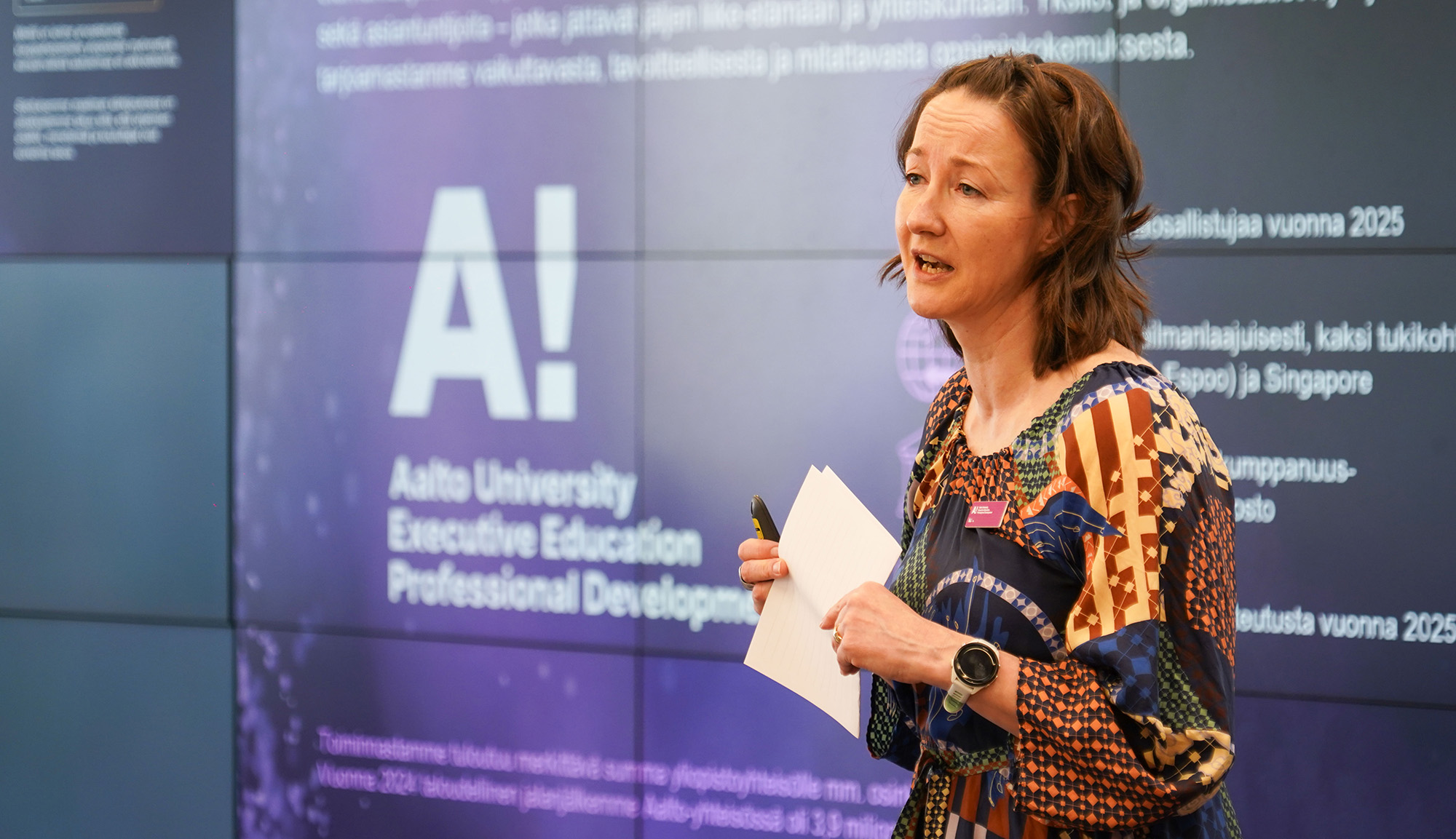
| The New Model for Leadership Development event was opened by Mari Rauhala, Aalto EE's Business Director responsible for leadership programs. | |