















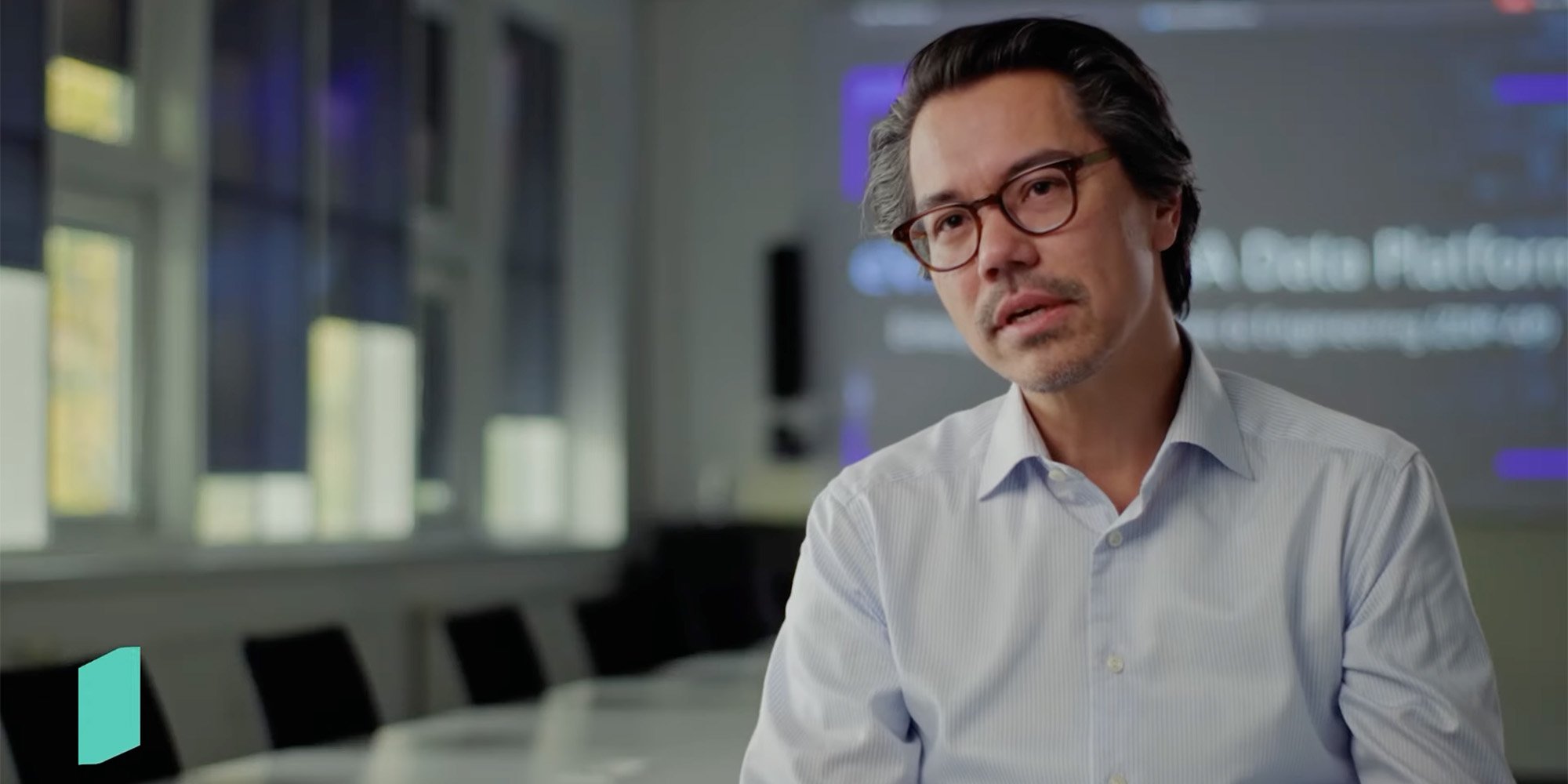
- Carl-Johan Nakamura is the keynote speaker at CDOIQ Symposium to the Nordics, which takes place on February 11 and is hosted by Aalto EE.
Carl-Johan Nakamura is refreshingly free to speak his mind after nearly two decades working in the corporate world. The list of companies he has mined data, managed projects, shuffled spreadsheets for is testament to his abilities: Siemens, IBM, Cerner Health, Oracle and ZEISS.
Now a large part of his focus is on executive search and strategy advisory in a rapidly changing business environment brought about by the explosion of AI technologies.
“It’s a good space to be in, even though it’s not easy. I mean, look at last year, it was a real mess,” he says.
The year saw a fluctuating tide of responses to AI as it evolves and a human struggle to understand what it means for businesses.
“What happened in 2025 is the evolution of agentic AI systems… that can really take on human workflow tasks in a very intelligent way, multiplied by hundred,” Nakamura summarises.
At firms such as Bain & Co or McKinsey, AI is already doing the kind of work that junior consultants would have done.
"Writing emails autonomously, finding client customer information, updating your CRM system automatically, meeting schedulers, can now be done by agentic AI models."
“Writing emails autonomously, finding client customer information, updating your CRM system automatically, meeting schedulers, can now be done by agentic AI models, says Nakamura.
We know the consequences, or at least know what the consequent human decision-making is.
“If you look at Mark Benioff, the CEO of cloud-based software firm Salesforce, this is what he said just a few weeks ago. He has regrets to the 4,000 workers he cut last year. In the US, unlike in Germany or Sweden or Denmark you get fired on the spot. There’s your box, there’s the door,” Nakamura explains.
While Benioff cut support staff numbers from 9,000 to 5,000, the firm is recruiting between 3,000 to 5,000 new salespeople. Benioff made the point that AI agents can’t replace sales staff specifically because it can’t replace human, face to face communication.
Some companies may be racing to cut staffing costs but adopting AI won’t automatically translate into business success. In fact, MIT’s 2025 Iceberg study shows that “Ninety-five per cent of enterprise companies, AI pilots, fail because they can’t generate ROI [return on investment]. The culture is not ready, the tech is not the problem, it’s the people and the processes,” explains Nakamura.
The lesson is that the capacity of AI to do human work currently has its limits, and executives need to be well aware of this. Anything AI-related makes for great headlines at the moment and news outlets rush to take advantage of that pulling power. It’s a simple equation that writers and editors make use of, reinforcing human fear of change while, as always, the truth is more complex.
A recent report by Oxford Economics muddies the waters, or possibly makes them clearer.
“Linking job losses to increased AI usage rather than other negative factors like weak demand or excessive hiring in the past conveys a more positive message to investors,” says the report from the analyst. Probably not much consolation if you’ve lost your job but it paints a clearer picture perhaps for business leaders.
Companies that invest in continuous learning stay ahead of change
While another game is possibly being played then, the advance of agentic AI is certainly replacing some human work but not as much as the headlines would have you fear.
As Nakamura says, the executive’s inevitable short-term focus on the next quarter can explain some of the regret Benioff expressed.
“If you know how these boards are thinking, they don’t think about 2030, they don’t think long term. They think in quarters to satisfy Wall Street, satisfy their shareholders. That’s all."
“And why? It’s very simple, it’s tied exactly to their bonuses. I was there myself,” he explains.
All of this is understandable, if not necessarily encouraging, if you are a chief data officer. The implied cynicism is not going to help make the case for your department to the CEO.
"Tie AI and the quality of your data in your company to the executive bonuses, then you can make sure that the data is very high quality which doesn’t damage customer relationships."
“There’s an answer to this, which is to tie executive bonuses to data and AI adoption. Tie AI and the quality of your data in your company to the executive bonuses, then you can make sure that the data is very high quality which doesn’t damage customer relationships,” adds Nakamura.
His solution means, then, a change in corporate culture. No mean feat but the frustration is clear.
Without naming names, he gives an example from his own experience many years ago.
“I had my CEO, CTO and another leader at the table – senior VP of sales – and we said this is what we have to do. Nothing happened because a few months later – the C-suite got reshuffled and it feels like starting over again, in many instances.”
He is also aware of the gravity of what he is hoping for.
“I mean, what senior managers would want to have those metrics? To be measured against the quality of your data?”
And yet the long reach for corporate cultural change is possible if you can make use of education that is up to date, that matches new technology as it emerges.
As Nakamura sees it, companies that invest in the continuing education of its workforce are the most effective in channeling the tides of change.
“There is an immense level of investment and focus around education. You have so many start-ups and so much focus around beefing up your AI literacy. We used to call it “data” but now it’s “AI” because AI is the sexy one right?”

Europe is falling behind the game
It is clear that the march of AI did quicken its pace in 2025 amongst leading countries’ businesses. In Germany, 42 per cent of companies reported the use of AI, according to Eurostat, the statistics branch of the European Commission. This compares to a figure of 28 per cent in 2024.
Interestingly, Finland came second behind Germany in the number of Euro companies adopting AI, with 38 per cent in 2025 and 24 per cent in 2024.
Sweden came third, at 35 per cent, up from 25, pointing to a Nordic readiness to move forward with AI business tools.
But if you delve deeper into the numbers, the figures across all 27 EU countries are far from impressive, with the overall average number of companies using AI in 2025 just below 20 per cent 2025.
Yet in the US, 78 per cent of organisations were already reporting use of AI in 2024, up from 55 per cent the year before, according to Stanford University’s AI index report in 2025.
Probably more significantly, it is not just the big firms in the US that are on board with this AI wave. A report by the US Chamber of Commerce last year found that 58 per cent of surveyed small businesses said they used generative AI.
As you would expect, it is the small businesses in the technology and financial services sectors with the highest use rates (77 and 74 per cent, respectively).
“Europe is falling behind the game,” summarises Nakamura.
“In the US they manage to get major projects done in 12 or 18 months. In the US you have a private sector that is being nurtured with investments from venture capital and private equity to allow companies to fade fast and try again.”
So a cultural difference is part of the story as to why US firms are willing to try something new, to adopt AI. Silicon Valley itself functions in an even more elevated acceptance of risk, of course.
"In Europe the risk appetite is not very high. You’ve got to be safe, don’t take risk, don’t take credit, don’t take loans, so it’s a different attitude."
“In Europe the risk appetite is not very high. You’ve got to be safe, don’t take risk, don’t take credit, don’t take loans, so it’s a different attitude,” he points out.
“The true leaders in this data and AI race are really the US and China. In the US, the innovation, risk appetite model has been working in the US for decades. This is my opinion with my 22 years in the US. Their attitude is part of their legacy.”
Nevertheless, Nakamura believes Europe can get back in the game. After those years spent working in the US as an executive in the AI and data side of business, he now wants to be part of a movement to guide Europe forwards.
There is certainly a growing feeling that regulation holds back businesses in Europe, certainly in relation to the adoption of AI tools. But when you consider regulation, it leads inevitably to ethics.
Europe’s AI Challenge: Balancing Regulation, Risk and Corporate Culture
There is a realisation in Europe that regulation is a bar to AI adoption and to fostering AI start-ups. The intention of the regulation is in creating a safer growth path for society but at the same time leaves entrepreneurs frustrated.
The feeling in America is that Europe acts as a sort of self-appointed world regulator, weighing privacy protections against business freedoms. The caution is widely attributed to the more brutal experiences endured in Europe’s twentieth century and that some wisdom was earned a hard way.
“What a minefield. What can you do when you have such very different approaches to responsibility? How on earth do you mesh something like that, and have one particular culture or two particular cultures leading the actual technology development? It’s a sticky topic,” says Nakamura.
“With the evolution of AI agents and generative AI and consumption of data is coming, we’re kind of in the middle of a storm right now. If I was a CEO of a global thousand company I would probably be waking up a few nights at 3am,” he adds.
However, he is clear about one thing, culture has a massive part to play in reaching some common ground.
“I remember quite vividly my CEO saying, ‘we’re going to take the risk with this GDPR [Europe’s General Data Protection Regulation] thing. We don’t need this team that you’re proposing’ and this is coming from a multi-billion dollar client and they're willing to take that risk."
“So I think we can talk about culture, and the culture always starts from the top leadership. If the leadership team has that level of excessive risk appetite, then it trickles down through the whole organisation.”
“So I think we can talk about culture, and the culture always starts from the top leadership. If the leadership team has that level of excessive risk appetite, then it trickles down through the whole organisation.”
And Nakamura returns to the issue he highlighted earlier: that many CEOs are there and gone in three or four years. So not enough time to change a corporation’s culture.
“Ninety five per cent of the time, most leaders that come on board – whether you are the CEO, CDO, or CTO – you do not have the guts to actually go in and completely turn around the chicken cage,” he says.
The chicken cage here is of course the organizational culture of the company and the patterns in which it functions.
“It’s very difficult for a leader who comes on board and completely reshapes the culture. The only exception is when you have a Jack Welch who grew up in GE [the US conglomerate General Electric] and then had a career in GE. He had a different kind of focus; you stayed in one company for life,” he adds.
Developing Tomorrow’s AI Leadership
Nakamura now runs his own company – AI81Works – with a three-pronged approach: executive search; strategy advisory and leadership development with a focus on senior AI and data roles.
When he says he wants to be part of a European push forward alongside developing technology, you can tell he means it.
“Seminars, education, symposiums, and events, it’s all kind of a pro bono play because I’m a big believer in nurturing the next generation of leadership. I have always done that since day one."
“And probably the reason is because I’ve been very much supported and mentored myself,” he adds.
He is involved in setting up what sounds like a sort of corporate sponsored university – he is coy about the details – in the US and is keen to encourage younger colleagues emerging from undergraduate degree programmes. You get the feeling that while he can access an enviable set of contacts in the business world to find places for senior executives, his concern runs deeper, longer.
He outlines three routes for younger colleagues: to continue in education and aim for a PhD; to join a SME and gain valuable project & product management experience; or to take another look at how you present your strengths.
"If you’re using language like ‘data analytics’ or ‘business intelligence’ maybe you swap it out with ‘AI’ because a lot of these hiring systems are quite autonomous and they’re picking up words like ‘AI’ and less ‘analytics’ now."
“If you’re an MBA and maybe you already have five years of professional experience, clean up your resume and position it so that you’ve been part of some transformational journey. If you’re using language like ‘data analytics’ or ‘business intelligence’ maybe you swap it out with ‘AI’ because a lot of these hiring systems are quite autonomous and they’re picking up words like ‘AI’ and less ‘analytics’ now,” says Nakamura.
His deep connection to the corporate world and his recently determined independence from it makes Nakamura’s observations in a rapidly changing business world a uniquely incisive gift. His honest opinion is to be sought at this year’s CDOIQ event.