













Built Environment Training Programs
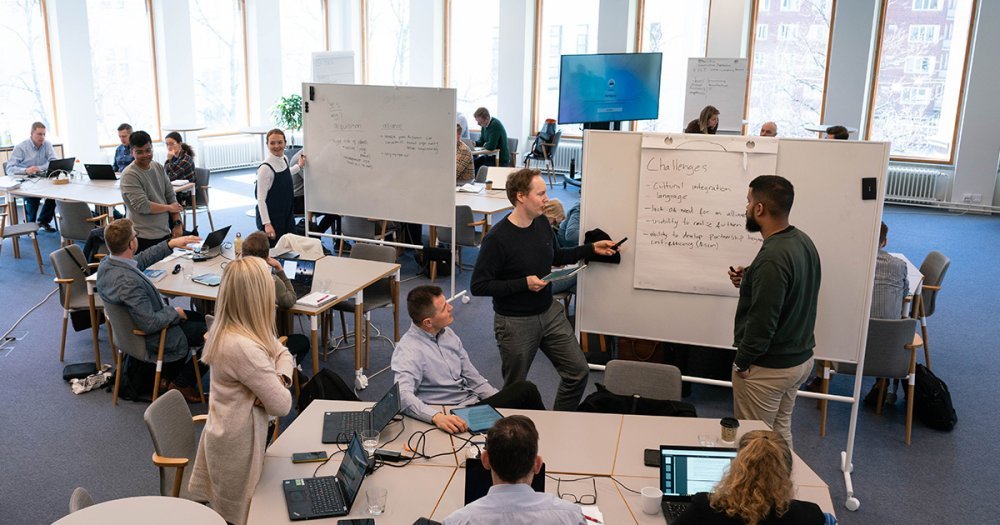
Navigating megatrends requires expertise. We have supported built environment professionals and organizations for half a century. Our training programs combine research-based academic knowledge, insights from leading industry experts, and participant experience. Interactive methods ensure our training meets current development needs and prepares you for the future of the built environment.
Some of our training courses can also be used to obtain FISE certifications.
See all trainings in the theme
Search for training programs and filter them by criteria such as your seniority level, the program level, or delivery mode. The search results are automatically updated based on your selections. You can also compare a maximum of three programs side by side by using the 'Compare' selection.
Filter trainings
August 24, 2026 – May 26, 2027
In this program, designed for professionals in planning, development, research, consulting, and management positions in the field of community planning, you will delve into community planning and urban research.
8 modules (16 days) + optional study tour abroad
€ 4,360 (+ VAT)
Product added to cart
YTK:n Pitkä kurssi – yhdyskuntasuunnittelun asiantuntijaohjelma
The training must be completed by June 30, 2027.
This course provides an overview of utilizing mining industry by-products and waste streams in the circular economy, combining technologies, data, regulations, and practical examples from the mining and construction sectors.
Free of charge
Product added to cart
Kaivosteollisuuden sivu- ja jätevirtojen hyödyntäminen
January 14 – May 11, 2027
Designed for professionals in transportation system planning, this program provides a comprehensive overview of the various levels of transportation system planning and supports coordination in transportation and land-use planning.
5 modules: 2 days onsite, 3 live online meetings and self-study material
€ 985 (+ VAT)
18.01.2027
Product added to cart
Liikennejärjestelmätyö
January 21 – August 15, 2027
The training introduces sustainable construction, project planning for developers, and project and people management. It supports professionals in updating their skills and is also suitable for teachers and government officials.
5 modules (10 days) + project work
€ 6,675 (+ VAT)
21.01.2027
Product added to cart
Kestävä rakennuttaja
The training must be completed by June 30, 2027.
This course covers innovation, productization, and commercialization of circular economy solutions in mining. Participants learn to spot business opportunities and apply market‑ and funding‑driven approaches within mining ecosystems.
Free of charge
Product added to cart
Kaivosalan kiertotalousratkaisujen innovointi ja tuotteistaminen kansallisille ja kansainvälisille markkinoille
The training must be completed by June 30, 2026.
This course introduces circularity in soil and aggregate materials in construction. You learn to use data and digital tools to manage material flows and understand how regulation and permitting affect the use of secondary materials.
Free of charge
Registration for this course is now closed
Estimated study time: 10 hours
This online course presents you with the different approaches to, cases, and applications of communicative urban mobility planning. The course is built for urban mobility and transportation professionals, urban planners, and other...
0,5 ECTS
€ 150 (+ VAT) € 150 (+ VAT) -30%
€ 150 (+ VAT)
Any time: License for 90 days starting from the order date
Product added to cart

Micro-Course in Communicative Planning for Urban Mobility
Estimated study time: 10 hours
This online course provides different approaches to Carbon Smart Urban Green Infrastructure. During the course, you will reflect on Urban Mobility Challenges and grasp the context and bigger picture of Urban Mobility, the built...
0,5 ECTS
€ 150 (+ VAT) € 150 (+ VAT) -30%
€ 150 (+ VAT)
Any time: License for 90 days starting from the order date
Product added to cart

Micro-Course in Smart Urban Green Infrastructure
Estimated study time: 54 hours
This program is a set of two online courses, the first focusing on wood structure and anatomy, and the second focusing on wood properties.
2 ECTS
€ 250 (+ VAT)
Learning path: Introduction to Wood Material
Product added to cart
Introduction to Wood Material
Estimated study time: 27 hours
During this self-paced online course, participants will learn about climate change and its impact on the built environment and human health. This forward-thinking course encourages learners to not only understand the challenges we are...
1 ECTS
€ 150 (+ VAT)
Any time: License for 90 days starting from the order date
Product added to cart

Climate-Conscious Construction for Healthy Cities
Estimated study time: 81-135 hours
This online course equips you with the tools needed to analyze and reduce the carbon footprint throughout a building’s lifecycle. It helps you lead the change towards carbon-neutral construction and navigate the changing regulatory...
3-5 ECTS
€ 500-800 (+VAT)
Product added to cart

Sustainability Toolbox for Building Designers
Estimated study time: 27 hours
This course presents the structure of wood material, including macroscopic features such as earlywood, latewood, heartwood, sapwood, and knots. Additionally, wood formation and the basic cell types are presented, as well as the main...
1 ECTS
€ 150 (+ VAT)
Part 1: Wood Structure and Anatomy
Product added to cart
Introduction to Wood Material / Part 1: Wood Structure and Anatomy
Estimated study time: 27 hours
This course links the basic anatomical features of wood, such as grain orientation and knots, to its properties relevant in the built environment.
1 ECTS
€150 (+ VAT)
Part 2: Wood Properties
Product added to cart
Introduction to Wood Material / Part 2: Wood Properties
Estimated study time: 54 hours
This online course will equip you with the latest insights and practical tools to enhance project efficiency, improve construction quality, and gain a competitive edge. You will explore strategies for addressing productivity challenges in...
2 ECTS
€ 300 (+VAT)
Any time: License for 90 days starting from the order date
Product added to cart

Lean and Digitalization in Construction
Meet Our Faculty
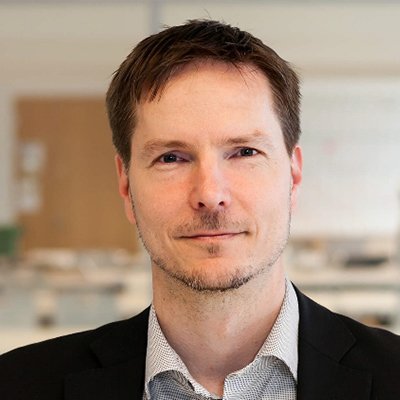
Matti Kuittinen
Dr. Matti Kuittinen is an Associate Professor of Sustainable Construction at Aalto University´s Department of Architecture.
His research is focused on climate impacts and circular economy in the built environment, as well as in the development of new building materials and methods.
During his work at the Ministry of the Environment of Finland, Kuittinen developed the national whole life carbon assessment method and initiated the Nordic Bauhaus programme. As an architect, he has designed experimental sustainable buildings and participated in humanitarian construction operations.
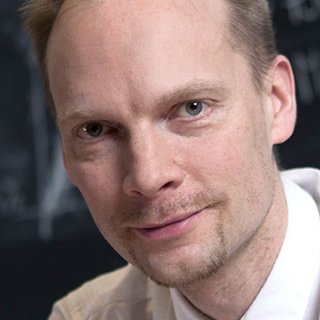
Olli Seppänen
Olli Seppänen is an Associate professor of operations management in construction at Aalto University, Department of Civil Engineering.
He has focused on lean and digital production planning and control and design management. He has over 100 scientific publications on these topics and has also 15 years of practical consulting experience before joining academia.

Laura Arpiainen
Laura Arpiainen is Professor of Health and Wellbeing Architecture at Aalto University School of Arts, Design and Architecture and has an international track record in all areas of design and planning for healthcare.
Arpiainen holds dual Finnish / Canadian citizenship and is particularly interested in the relationship of built environments to health. Other interests include mental health, diversity, and the role of optimism in success. Laura leads the SOTERA research group at Aalto University and is also a popular mentor, keynote speaker, and visiting critic.

Antti Peltokorpi
Antti Peltokorpi is an Associate Professor of operations management in construction at Aalto University, Department of Civil Engineering.
In his research he has focused on modularity and industrialization in construction, AI and data-based transformation of the sector, and digital supply chain management. He has over 100 scientific publications on these topics. Peltokorpi is also a Vice Dean for Impact at School of Engineering. Besides his academic merits, he works in close collaboration with the AEC industry.

Jari Ylitalo
Jari Ylitalo, PhD, is a University Lecturer in Leadership at Aalto University School of Science and Aalto Ventures Program.
He teaches, in particular, master's students on leadership, teamwork, and self-management.
Ylitalo's pedagogical approach emphasises a dialogical and resource-oriented approach. He also works as a supervisor, coach, and workplace facilitator. He has a long and diverse experience in coaching and developing leaders, management teams, and organisations in both corporate and public organisations.
Ylitalo's research has focused on leadership and leadership development, with a particular emphasis on the effectiveness of guidance, resource-centred and dialogue-based development approaches. He has also studied the social dynamics and development of cooperation and partnerships between companies and organisations, as well as network management and the development of a network approach.
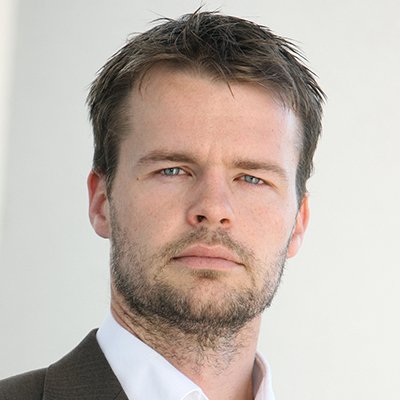
Jukka Heinonen
Jukka Taneli Heinonen currently works as a Professor of Sustainable Built Environment at the Faculty of Civil and Environmental Engineering, University of Iceland.
Having graduated in Economics from Helsinki University, he obtained a PhD from Aalto University in Helsinki, Finland.
Heinonen specializes in the challenges of sustainable development in community structures and lifestyles. His main fields of research are consumption-based urban carbon footprinting and low-carbon urban settlements.
Jukka Heinonen has developed research approaches and analysis methods specifically for modeling indirect and outsourced emissions from the built environment. He is one of the world’s top 1,000 climate change researchers on the list published by Reuters in 2021, and in a recent study, he was named one of the world’s top 10 carbon footprint researchers.
Featured Insights on Built Environment


Contact Us


Megatrends Reshaping the Built Environment
Megatrends like climate change, urbanization, and digitalization are significantly impacting the built environment. Building energy efficiency requires minimizing energy consumption throughout the lifecycle and integrating circular economy principles into material selection. Urbanization necessitates effective urban design and transportation planning to create quality living and working spaces. The potential of digital transformation to address these challenges is still being explored, but platform economy, sharing economy, and circular economy business models are already transforming transportation, housing, and construction.
Digitalization: A Societal Shift
Digitalization and artificial intelligence extend beyond digital tools; it is a societal transformation. Urbanization has enabled advanced digital applications to permeate our lives. Increased density simplifies logistics and enables services like public transport apps and city bikes.
Digitalization and AI also foster urban social life and activism, influencing how we inhabit and design our cities. Professionals must master interactive design methods and understand end-user needs.
Digitalization improves information sharing and transparency in construction projects, creating new business opportunities. Building Information Modelling (BIM) is digitizing design and reshaping the entire design culture.
Construction and Climate Change: Sustainable Solutions
The built environment plays a critical role in mitigating climate change. Sustainable construction practices, including wood construction, energy efficiency optimization, and renewable energy integration, are essential for reducing carbon emissions. Land-use planning and transportation system design are critical, as urban areas contribute significantly to our carbon footprint. Urban green spaces and carbon handprint initiatives highlight the role of nature in urban environments. Teleworking and sustainable transportation options demonstrate the potential of digitalization.
Building a Sustainable Environment: Education and Expertise
Aalto EE has supported built environment professionals for almost 60 years. Our training focuses on urban planning, construction management, and transportation planning.
We emphasize the Aalto spirit, including multidisciplinarity, sustainable development, corporate social responsibility, design expertise, entrepreneurship, and innovation.