












Building Sustainable and Regenerative Business with Leaders
Sustainability and regenerative business are becoming central to strategic decision-making in organizations worldwide. Aalto EE’s programs empower leaders and experts in navigating this transition by offering cutting-edge research, inspiring perspectives, and concrete frameworks that help address global challenges while creating new value for the organization and its stakeholders.
Our learning experiences integrate academic excellence, strong practical relevance, and personal transformation. We support leaders in making sustainability a strategic choice, driving organizational change, and building business solutions that strengthen not only the future of the company but also the resilience and vitality of society and the natural environment.
Download Files
The sustainability competence development mapping template contains questions that are useful to consider when planning competence development. Download the PDF to support your planning.
Sustainability Competence Development Mapping
pdfThe plan template contains questions about what to consider in sustainable transformation while planning sustainability competence development. Download a PDF to help your planning.
Sustainability at Aalto University



See all trainings in the theme
Search for training programs and filter them by criteria such as your seniority level, the program level, or delivery mode. The search results are automatically updated based on your selections. You can also compare a maximum of three programs side by side by using the 'Compare' selection.
Filter trainings
The training must be completed by June 30, 2027.
This course provides an overview of utilizing mining industry by-products and waste streams in the circular economy, combining technologies, data, regulations, and practical examples from the mining and construction sectors.
Free of charge
Product added to cart

Kaivosteollisuuden sivu- ja jätevirtojen hyödyntäminen
The training must be completed by November 30, 2027.
Strengthen your expertise in industrial energy efficiency. The course covers industrial energy management, measurement, process heat optimization and practical solutions for electrifying production.
Free of charge
October 13, 2026
Product added to cart

Teollisen mittakaavan energiatehokkuuden parantaminen
April 19 – September 2, 2027
The program provides you with solutions to strengthen your organization's competitiveness and develop regenerative business. In the training, you will learn how to integrate sustainability into strategy, build a culture of responsibility,...
Three modules (5 days) + online course and preliminary assignmentstasks
€ 5,500 (+ VAT) € 4,900 (+ VAT)
€ 5,500 (+ VAT)
19.04.2027
Product added to cart

Kestävän liiketoiminnan johtaminen
The training must be completed by June 30, 2027.
This course covers innovation, productization, and commercialization of circular economy solutions in mining. Participants learn to spot business opportunities and apply market‑ and funding‑driven approaches within mining ecosystems.
Free of charge
Product added to cart
Kaivosalan kiertotalousratkaisujen innovointi ja tuotteistaminen kansallisille ja kansainvälisille markkinoille
The training must be completed by June 30, 2026.
This course introduces circularity in soil and aggregate materials in construction. You learn to use data and digital tools to manage material flows and understand how regulation and permitting affect the use of secondary materials.
Free of charge
Registration for this course is now closed
By appointment, on selected date.
The APV ESG exam helps maintain up-to-date expertise in the investment services sector. The exam is available in Finnish. Please note that the exam web page is also in Finnish.
€ 85 (+VAT)
APV ESG -tentti
Agreed together with the customer
This organization-specific Masterclass provides executive teams and boards with a common understanding of the significance of sustainability for the company's business, both from the perspectives of productivity and impact. After the...
1 day
€ 13,500 (+ VAT)
Agreed together with the customer
Product added to cart
Top Management Masterclass in Strategic Sustainability
Estimated study time: 54 hours
This self-paced online course covers basic concepts of sustainability, sustainable development, bioeconomy, and circular economy. Considering a value chain perspective, from the source of material all the way to the end-of-life management...
2 ECTS
€ 300 (+VAT)
Any time: License for 90 days starting from the order date
Product added to cart
Bio-Based Products Sustainability
Estimated study time: 54 hours
This online course offers a comprehensive overview of battery technology, equipping you with the knowledge to contribute to sustainable energy solutions. By exploring various aspects of batteries, including raw materials and recycling...
2 ECTS
€ 300 (+VAT)
Any time: License for 90 days starting from the order date
Product added to cart

Batteries: Raw Materials and Recycling
Estimated study time: 81 hours
This online course is designed for professionals, and anyone interested in understanding the role of hydrogen in the global shift toward sustainable energy. It offers a comprehensive introduction to hydrogen technologies, applications,...
3 ECTS
€ 900 (+VAT)
Any time: License for 90 days starting from the order date
Product added to cart

Hydrogen Business Basics
Estimated study time: 27 hours
This course offers a comprehensive overview of how the seas are used across different domains. It is open to anyone interested in maritime operations and their broader significance, regardless of background. Core topics include maritime...
1 ECTS
€ 150 (+VAT)
Any time: License for 90 days starting from the order date
Product added to cart

Sustainable Maritime Operations in Global Context
Estimated study time: 54 hours
Engineering Materials for the Circular Future is an online course that equips professionals with the tools to assess and improve material circularity. Across six modules, learners explore recycling, repurposing, cascading,...
2 ECTS
€ 300 (+VAT)
Any time: License for 90 days starting from the order date
Product added to cart

Engineering Materials for the Circular Future
Estimated study time: 27 hours
This flexible online course introduces the packaging value chain, covering material properties, manufacturing processes, and sustainability drivers shaping design, production, and recycling decisions.
1 ECTS
€ 150 (+VAT)
Any time: License for 90 days starting from the order date
Product added to cart

Introduction to the Packaging Value Chain
Read Customer Experiences
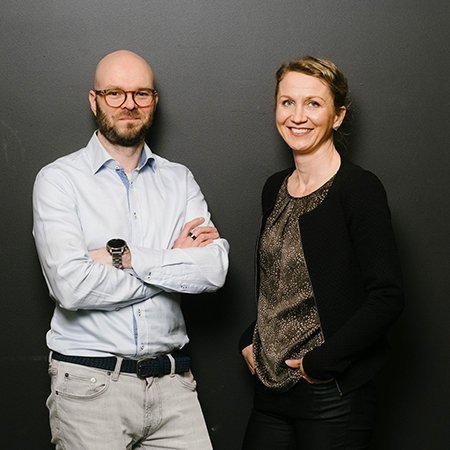
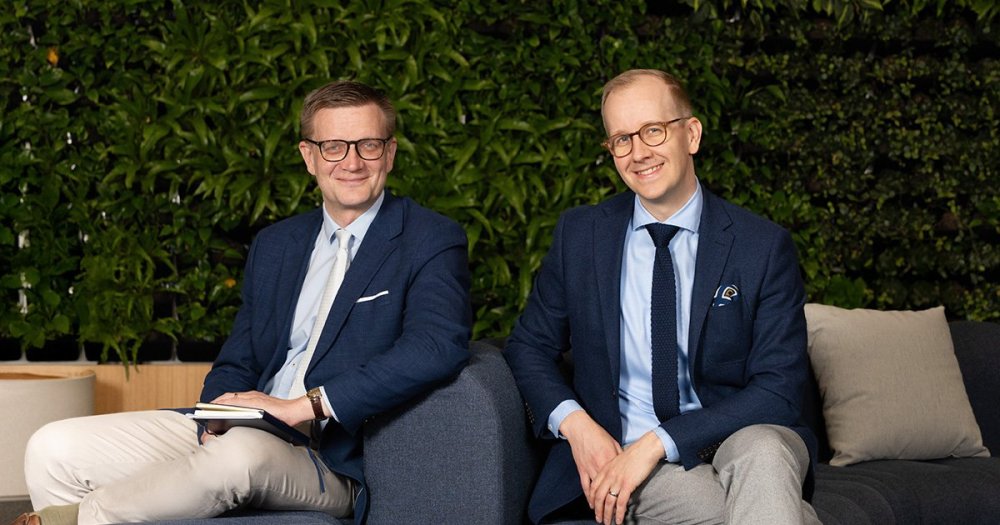
Taina Kokkarinen & Tuukka Hartikka
Helen Ltd."It’s important that people understand where the shift is heading. Hydrogen Business Basics offers an excellent foundation for that."
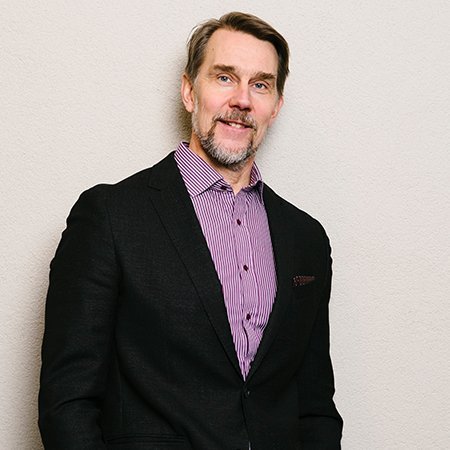
Marko Kohvakka
Director, HR & Sustainability, Pihla Group Oy"Sustainable development is now firmly embedded in Pihla Group’s strategy."
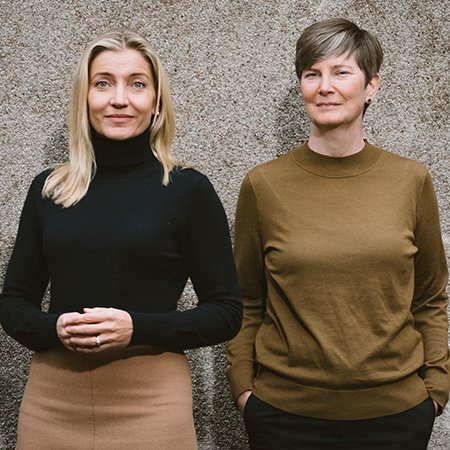
Esa Mouhu, Janina Ollberg and Annika Jyllilä-Vertigans
Vieser Ltd"We gained a comprehensive outlook on sustainability, which enables us to explain sustainability issues to others internally."
Meet Our Faculty
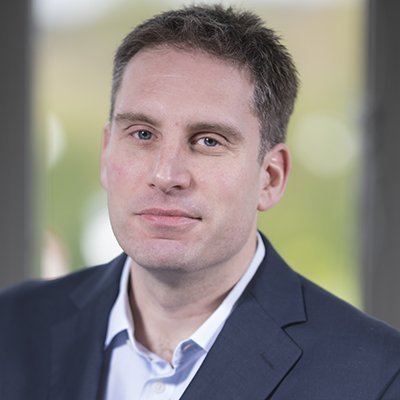
Frederik Dahlmann
Dr. Frederik Dahlmann is an Associate Professor of Strategy and Sustainability at Warwick Business School (WBS). Prior to joining WBS, he gained professional experience in the construction sector and worked as an energy analyst in London.
Dr. Dahlmann's research focuses on understanding how companies and other organizations respond to global sustainability challenges through their business strategies, management practices, and corporate governance systems. He is particularly interested in the effectiveness of organizational climate change strategies, and the emergence of purpose ecosystems for driving a sustainability transformation.
Dr. Dahlmann is an Associate Editor for the journal Business & Society and a Senior Research Fellow of the Earth System Governance network.
Maria Joutsenvirta
Leena Lankoski
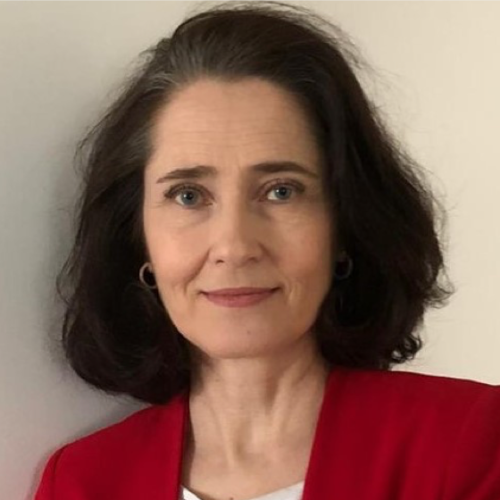
Dr. Leena Lankoski is currently working as a Senior University Lecturer in Sustainability in Business at Aalto University School of Business.
She also holds a Title of Docent in Corporate Responsibility at the University of Helsinki and is a Visiting Scholar at INSEAD, France.
Leena Lankoski has been working with corporate responsibility and sustainability questions for almost 30 years in Finland and elsewhere, both as an environmental consultant at the United Nations and lately in academia. During her years in the field, Dr. Lankoski has looked at questions at the interface between business and society from a number of perspectives, ranging from strategies and competitiveness issues for single firms and sectors to macro-level and policy questions in a globalized economy. Her academic research spans across several topics such as the relationship between a firm’s sustainability performance and financial performance, the different meanings that ‘sustainability’ can take in a business context, behavioural and organizational change for sustainability, and sustainability and ethics in a digital economy. She has taught corporate responsibility and sustainability for university students at all levels as well as for executive audiences for 20 years.
Lankoski holds a D.Sc. in Industrial Engineering and Management from Aalto University and an MBA from Cass Business School, London.

İdil Gaziulusoy
İdil Gaziulusoy is an Associate Professor of Sustainable Design and the leader of theNODUS Sustainable Design Research Group in the Department of Design.
İdil Gaziulusoy is a sustainability scientist and a design researcher. She is the leader of the NODUS Sustainable Design Research Group in the Department of Design. Her research focuses on transformative sustainability innovations and sustainability transitions in urban and business contexts.
Professor Gaziulusoy teaches Systems Thinking and Critical and Transformative Futures courses at Aalto’s Creative Sustainability program and Design Futures in the Bachelor of Design program of the Department of Design. She is a member of the editorial board of the Journal of Design Research, an advisory board member of Finland Futures Academy, and a scientific co-director of the Sustainability Science Days conference. She has also served in the scientific advisory board of Demos Helsinki in 2022-2023.
She provides advice, consultancy, and training for Finnish and international businesses, innovation agencies, and governmental bodies on topics related to sustainable futures, transformative sustainability innovation, and sustainability transitions.
Featured Insights on Sustainability




Contact Us



Corporate and Environmental Responsibility and Global Challenges
Corporate social responsibility (CSR) is a strategic tool that enables companies to improve their competitiveness and develop their businesses. The key issue is understanding what CSR means and how to demonstrate it. Although compliance with laws and international standards is the starting point in this respect, stakeholders increasingly require that companies fulfill their responsibilities as extensively as possible.
Corporate social responsibility (CSR) is also essential from society's point of view. Companies play a key role in meeting global economic and social challenges and solving environmental problems. For example, investing in new, environmentally-friendly technologies is the best way to mitigate and adapt to climate change and scarcity of resources, and promote the circular economy. In the best-case scenario, CSR is directly reflected in people's everyday lives and the state of the environment.
Responsible Companies Are Desired Partners
Responsible values make companies reliable and desirable partners. Making choices that build a sustainable future is vital to businesses and society. The earlier the stage at which a business is built sustainably, the more stable its future will appear.
CSR is integral to the business competencies of a successful company. A socially responsible company works in the most sustainable manner possible and reconciles its goals and expectations with its stakeholders. Regardless of its size and sector, any company can harness corporate social responsibility as a strategic competitive advantage by responding to the challenge of sustainable development. CSR is also part of good leadership.
Corporate Social Responsibility (CSR) Begins with Management
CSR concerns the entire organization. It should also be considered regarding a company's performance and strategy, and put into practice in business activities. That is why those managing CSR issues need a strong line of communication with all parts of the company, and senior management must understand the issue's importance.
Instead of corporate social responsibility, we often refer to sustainable development, a broader concept. CSR has traditionally been viewed as addressing social and economic issues and the environment.